VAPOR & SILK
80 mm mark width · 12 mm nominal zone
STRUCTURAL DESIGN / SINGLE BLOOM
A review package for the brand team, packaging designer, structural engineer and manufacturer.
Every drawing uses the same provisional envelope. All linear values are millimetres. Projected 3D views are diagrammatic; do not measure a screen or printout to obtain cut sizes.
Includes an assumed robust lower foot; actual profile and mass unknown.
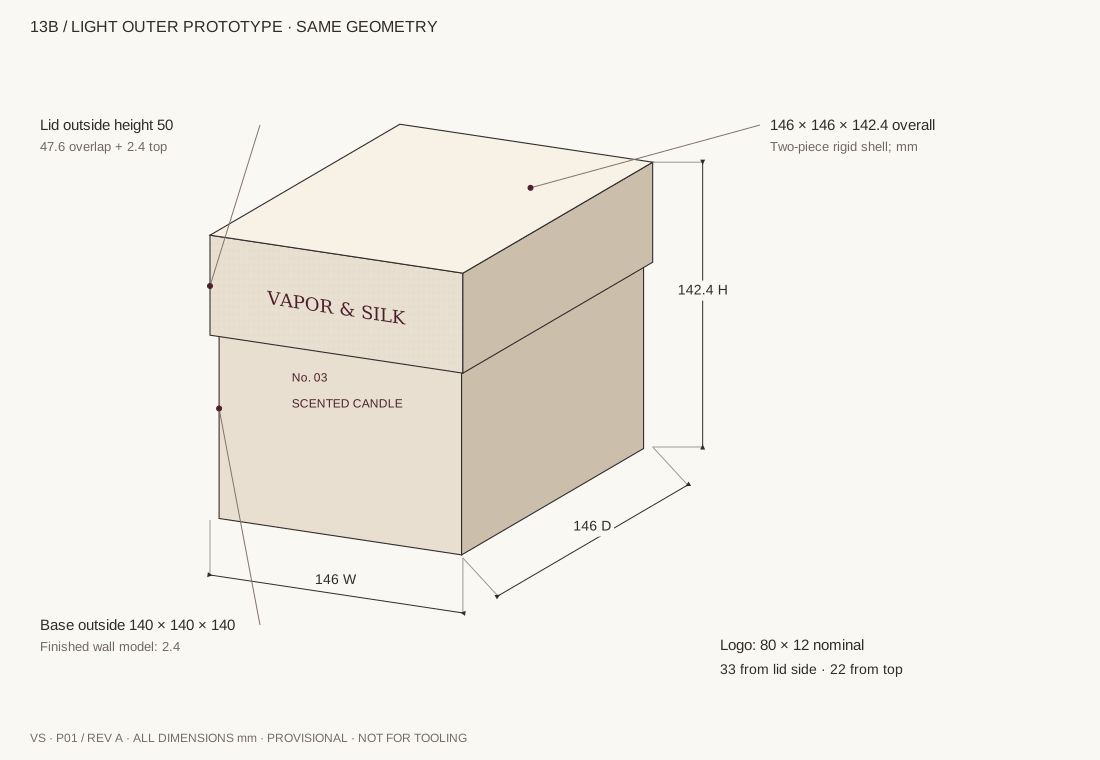
140 mm base + 2.4 mm estimated lid top; 47.6 mm overlap.
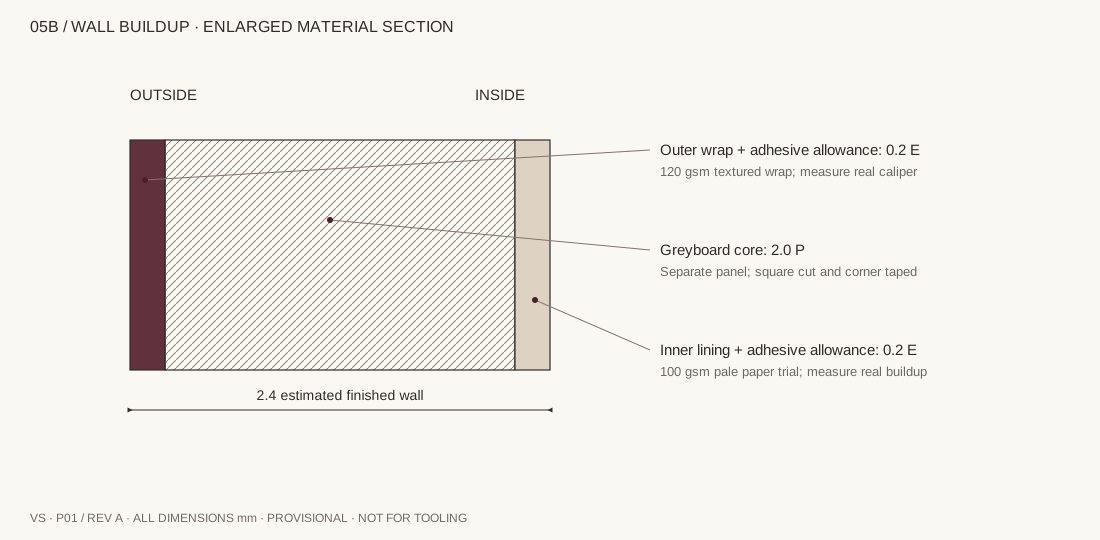
2.0 greyboard + 0.4 combined wrap, lining and adhesive allowance.
P Proposed geometry E Estimated caliper V Manufacturer verification required F Final approved dimensions: none
Single Bloom / structural concept P01. A wax tulip held inside a calm architectural shell.
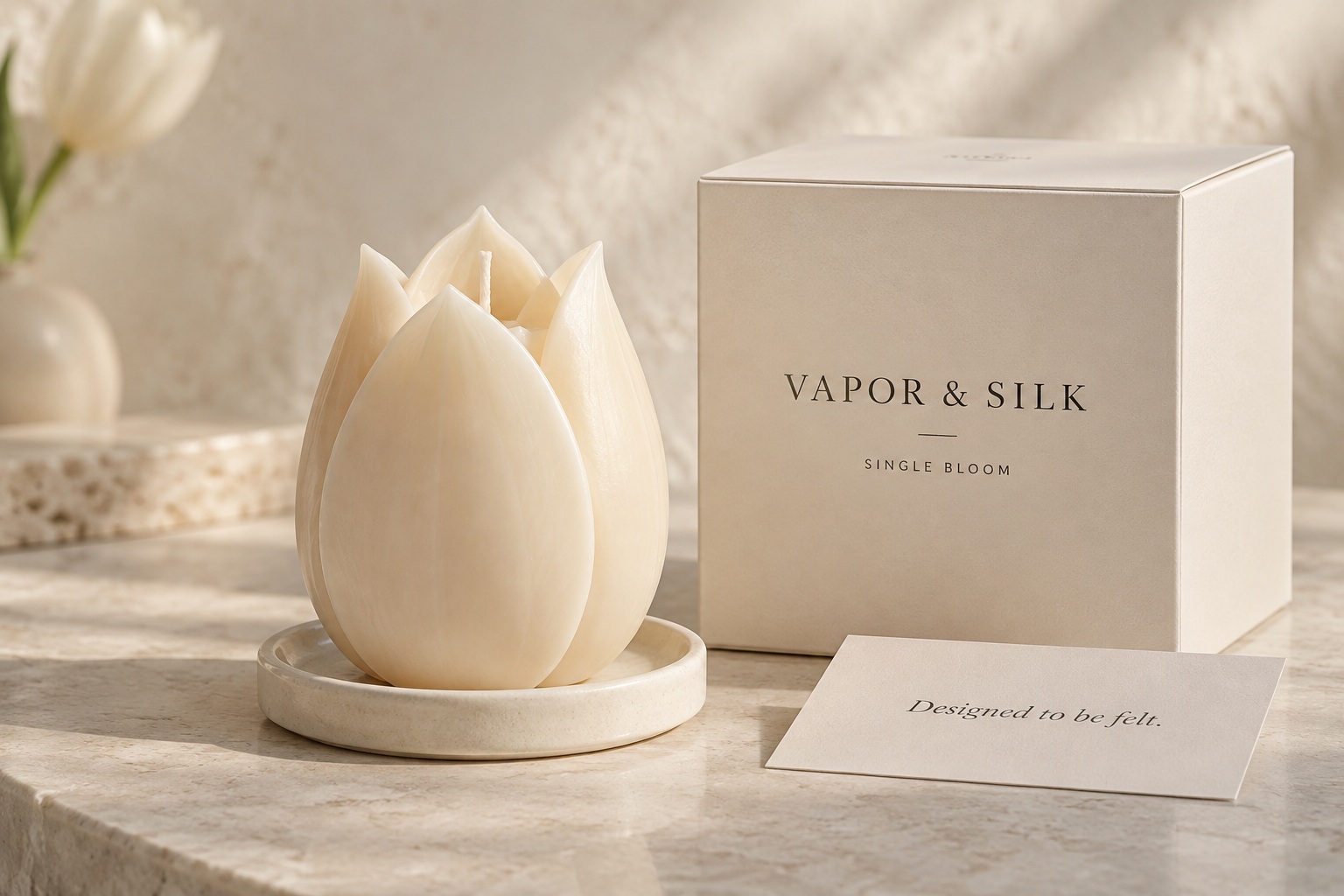
Product reference only. The wax profile, holder and rigid packaging must be sampled; this photograph is not the dimension source.
The presentation box controls the reveal. A separate corrugated carton and fitted paper pads protect it in transit.
The wax tulip is the product. The ceramic saucer is a separate, provisional holder, not a tulip-shaped vessel.
No ribbon, sleeve, magnet or decorative seal in P01. Paper tape seals the shipping carton only.
| Component | Role |
|---|---|
| 01 / Lid | Covers 47.6 of the base; lifts off vertically |
| 02 / Protective cover | Below story layer, over rigid bridge; never load the petals |
| 03 / Story card | Top of 112 × 112 × 2 bridge pocket |
| 04 / Care card | Separate lower pocket on bridge; retain for reading after removal |
| 05 / Inner carrier + bridge | Carrier at base floor; bridge underside z=132.4 on side supports |
| 06 / Insert / collar | Around sturdy wax foot / holder rim; below petals |
| 07 / Candle + holder | Holder at z=20.4; wax starts z=32.4 |
| 08 / Box base | Inner floor z=2.4; 135.2 square clear cavity |
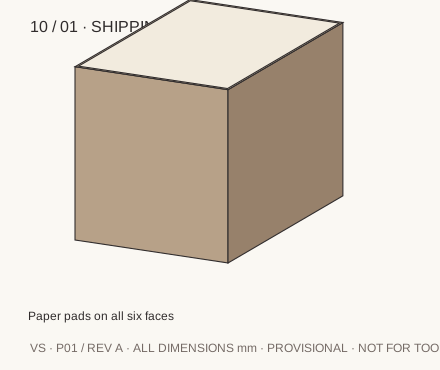
| 09 / Shipping carton | 20 paper pads on all six sides; packed product inside |
| 09a / Paper transit pads | Restrains all three axes; crush response to test |
Oxblood, a pale interior and a small wordmark. A 3D view and a front elevation share the same dimensions.
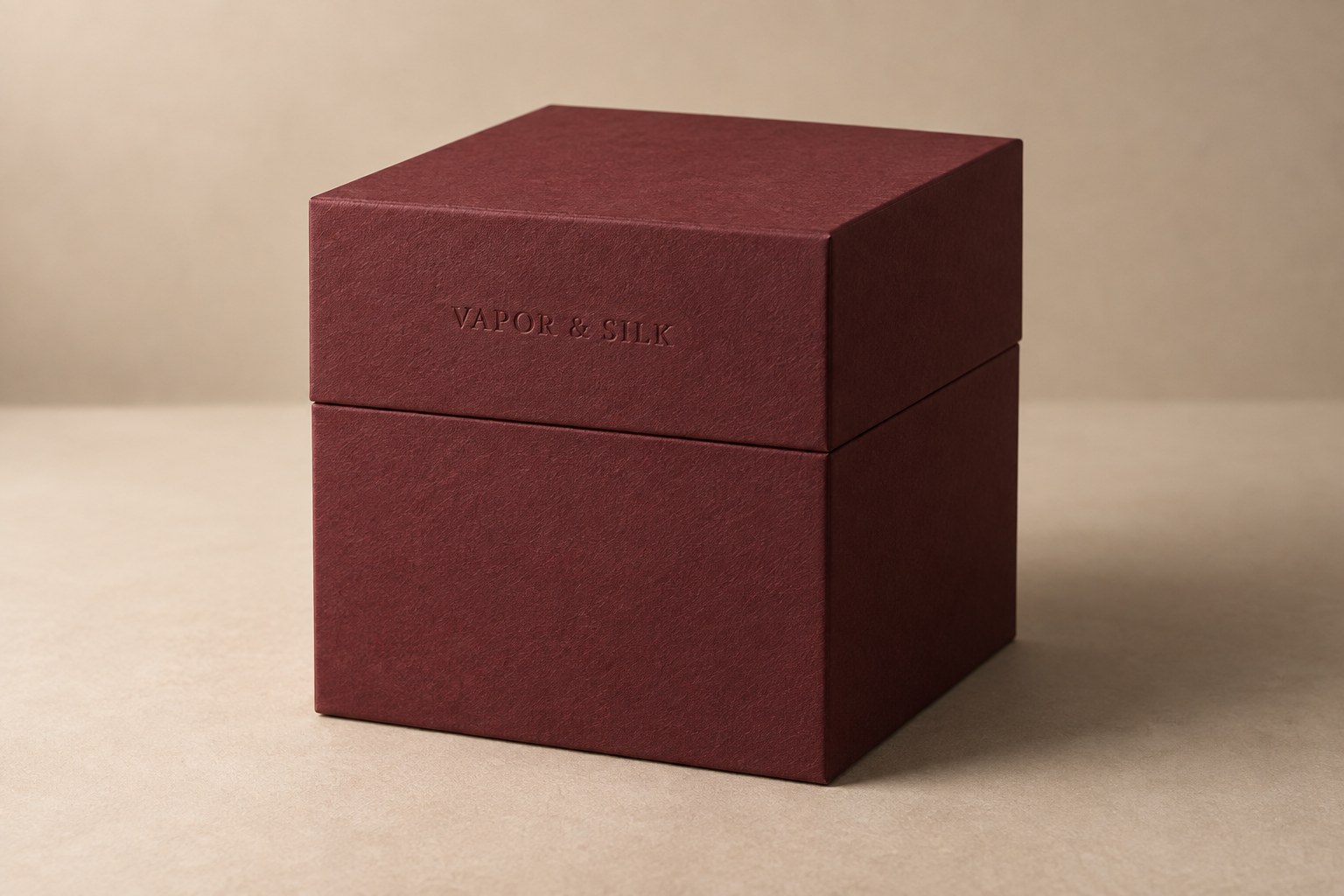
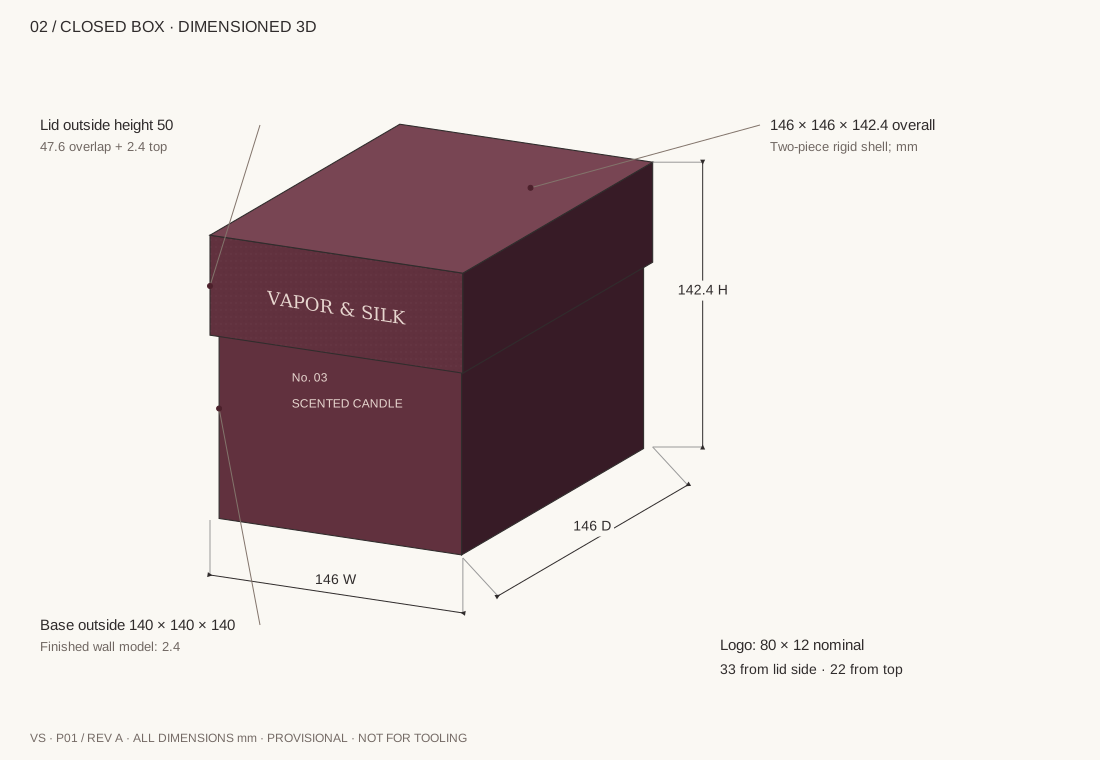
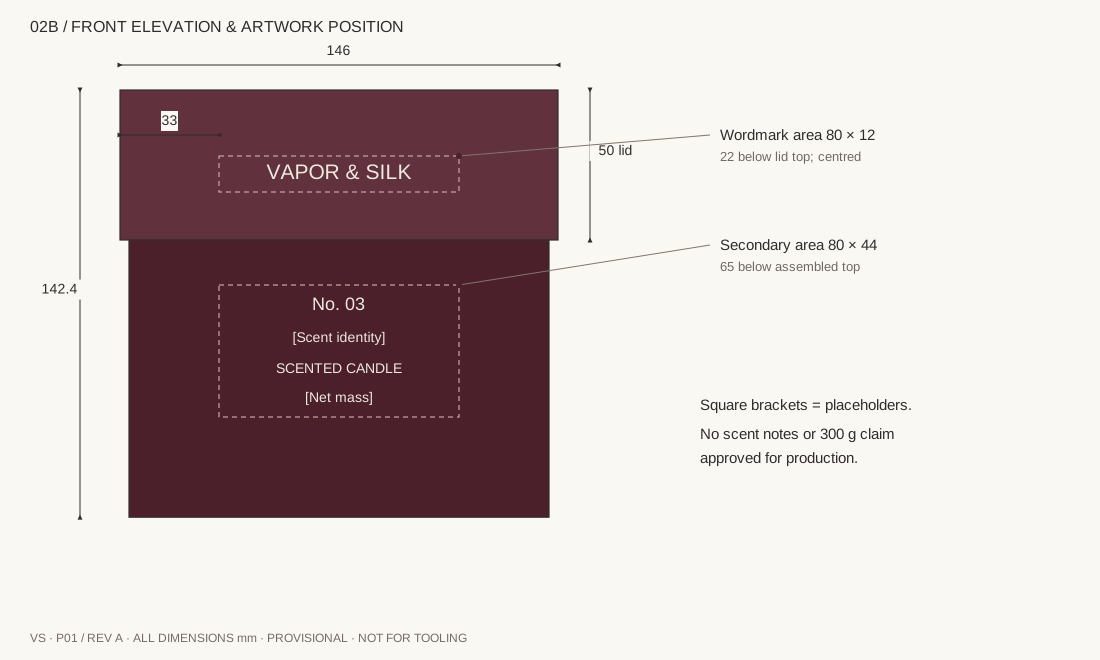
The proposed front uses the working Vapor & Silk wordmark, a scent number and a compact product description. No fragrance notes or “300 g” claim will go into production artwork until confirmed. The base label carries the remaining product information.
Separate lid and base shells, each wrapped and lined. Crisp edges come from the construction, not a printed border.
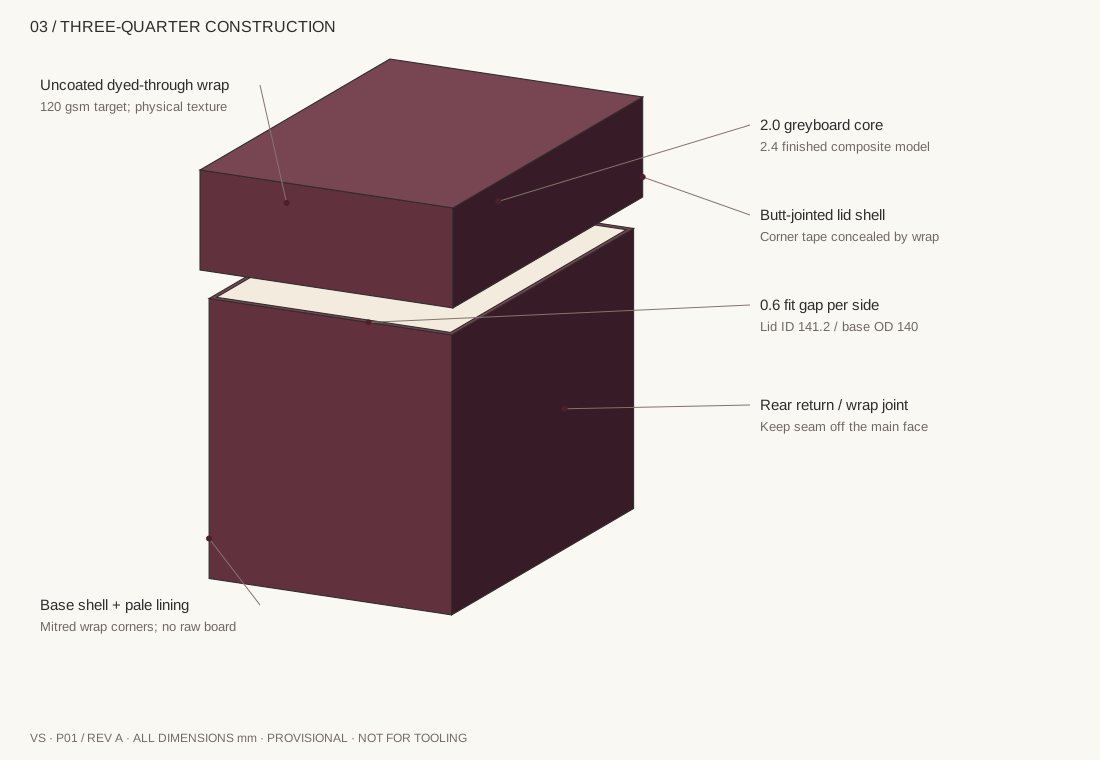
| Detail | Proposed treatment | Verification |
|---|---|---|
| Wrap | Dyed-through textured uncoated paper, 120 gsm starting point | Check grain, scuffing, seam visibility and colour rub |
| Rigid core | 2.0 mm greyboard; square butt-jointed panels | Check bow, squareness and corner-tape buildup |
| Lining | Uncoated pale paper, 100 gsm trial | Measure finished buildup; check glue staining and odour |
| Seam | Rear face wrap return; concealed corner joints | Converter develops wrap ears, mitres and overlap allowance |
| Logo | Blind deboss on flat wrap before assembly | Trial depth and stroke width; no guessed finished impression depth |
| Fit | 0.6 mm nominal clearance per side | Paired lid/base fit after conditioning; local tight spots matter |
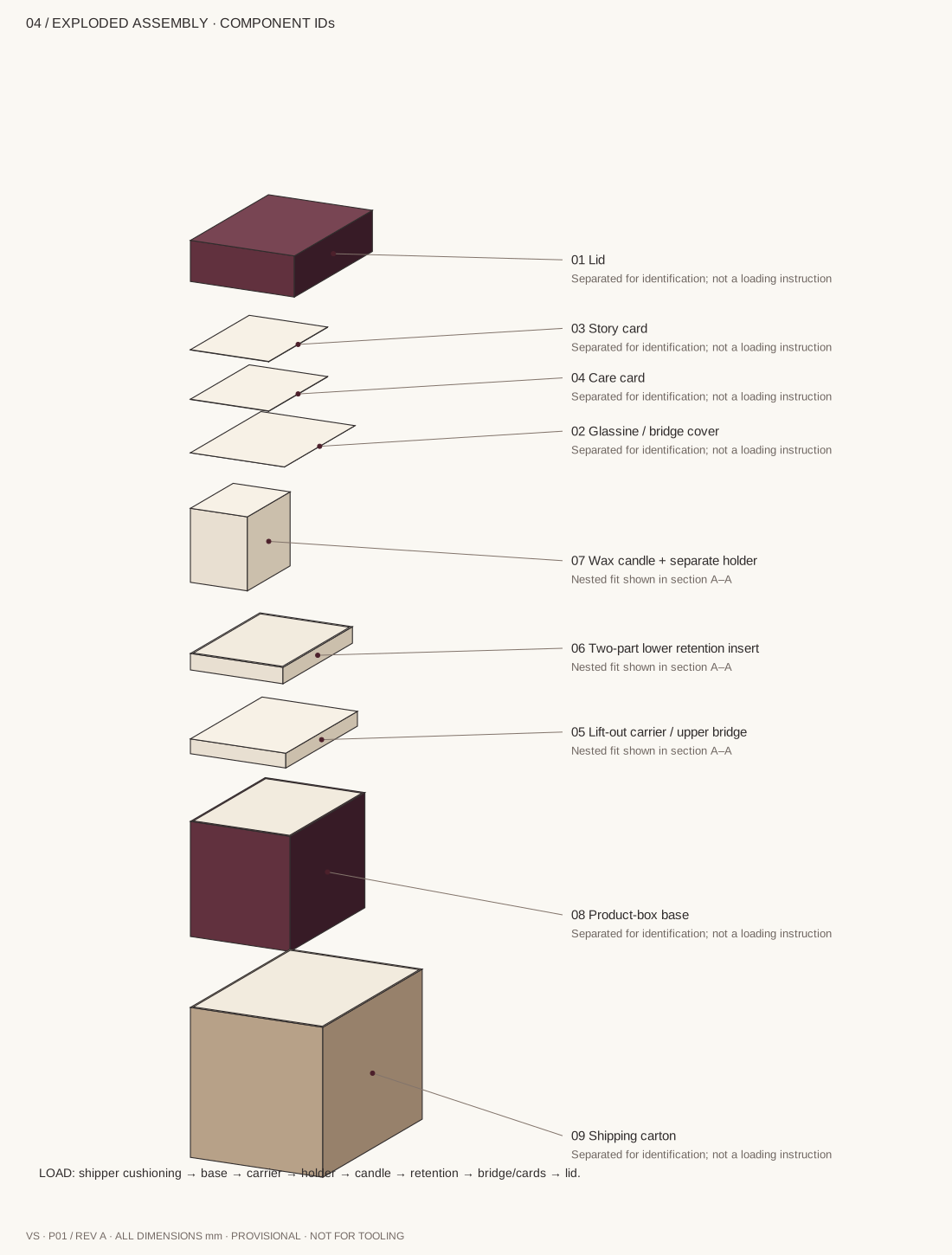
Component IDs match the specification table. Parts that nest together are separated for visibility.
| ID / component | Approx. dimensions (P) | Material / thickness | Finish | Production method | Installed role |
|---|---|---|---|---|---|
| 01 / Lid | 146 × 146 × 50 | 2.0 greyboard; finished wall 2.4 E | Uncoated oxblood wrap; blind deboss | Cut panels, corner-tape, wrap and line | Covers 47.6 of the base; lifts off vertically |
| 02 / Protective cover | 132 × 132; 0.05 E | 40 gsm glassine; caliper to measure | Unprinted | Guillotine / die-cut | Below story layer, over rigid bridge; never load the petals |
| 03 / Story card | 110 × 110; 0.4 E | 300 gsm uncoated paper | Single-colour ink; personal note on reverse | Digital prototype; offset at repeat volume | Top of 112 × 112 × 2 bridge pocket |
| 04 / Care card | 110 × 110; 0.4 E | 300 gsm uncoated paper | Dark ink; readable instructions | Digital / offset | Separate lower pocket on bridge; retain for reading after removal |
| 05 / Inner carrier + bridge | 134 × 134 × 18 lower platform; 132 × 132 × 0.8 bridge | 0.8 SBS board | Pale uncoated surface | Die-cut, crease, folded legs; separate bridge | Carrier at base floor; bridge underside z=132.4 on side supports |
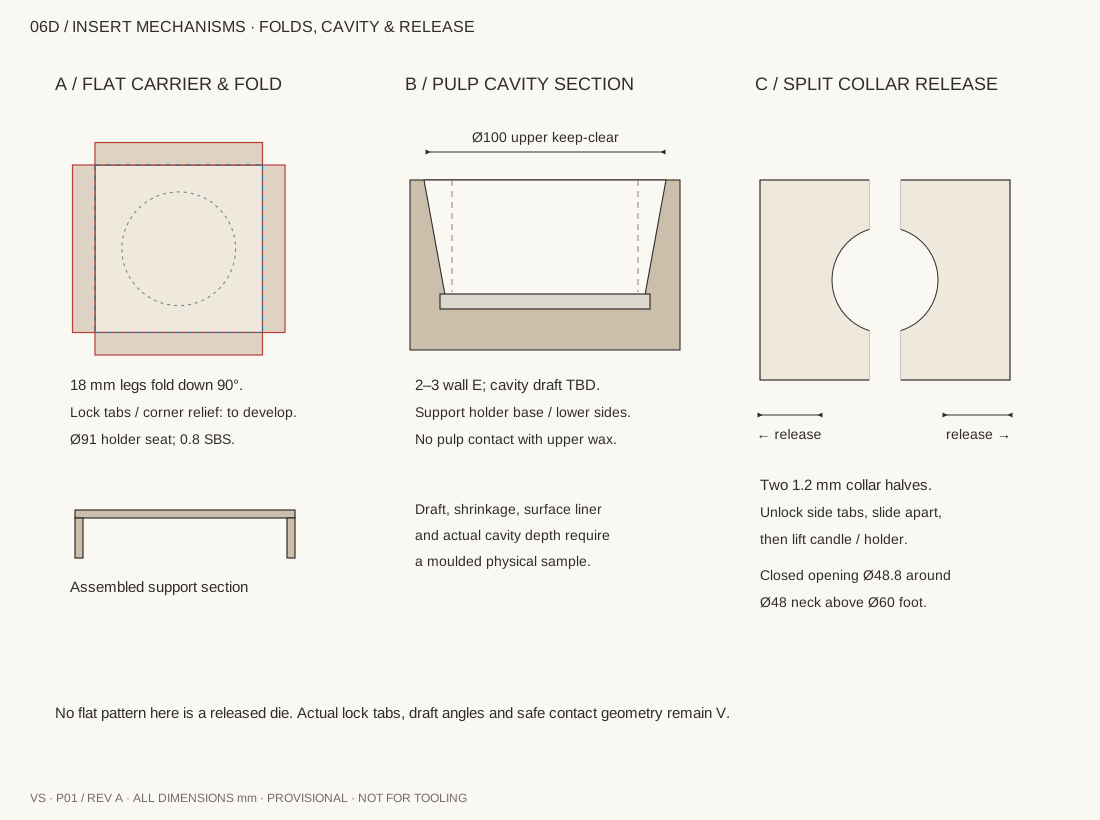
| 06 / Insert / collar | 130 × 130 × 20 envelope; Ø48.8 trial neck aperture | 1.2 laminated paperboard | Pale; smooth, rounded contact edges | Two-piece slotted collar, locked to carrier | Around sturdy wax foot / holder rim; below petals |
| 07 / Candle + holder | Wax Ø80 × 90; holder Ø90 × 12 | Wax blend TBD; ceramic holder wall 3 E | Ivory wax; satin holder glaze trial | Candle mould / ceramic slip-cast or press + fire | Holder at z=20.4; wax starts z=32.4 |
| 08 / Box base | 140 × 140 × 140 | 2.0 greyboard; finished wall 2.4 E | Oxblood outside; pale lining inside | Cut panels, corner tape, wrap and line | Inner floor z=2.4; 135.2 square clear cavity |
| 09 / Shipping carton | 186 × 186 × 182.4 internal | 3.0 E corrugated board; grade TBD | Kraft; one-colour handling marks | Slotted corrugated carton, paper tape | 20 paper pads on all six sides; packed product inside |
| 09a / Paper transit pads | 20 nominal installed thickness | Folded corrugated / honeycomb paper | Unprinted | Die-cut / folded locking pads | Restrains all three axes; crush response to test |
Section A–A uses the finished dimensions. Wax is shown as a keep-clear envelope, not as a measured tulip profile.
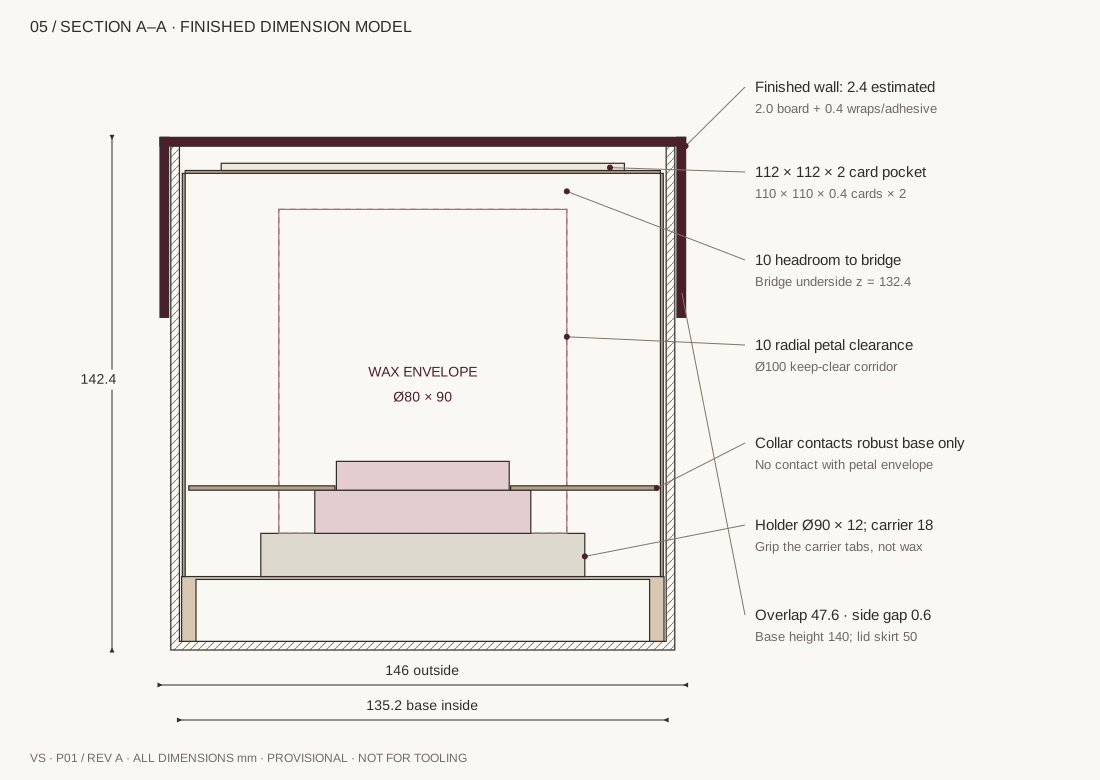
| Height reference | Nominal z from bottom (P) | Why it matters |
|---|---|---|
| Base inner floor | 2.4 | Finished composite floor estimate |
| Carrier deck / holder bottom | 20.4 | 18 mm carrier below holder |
| Holder top / wax bottom | 32.4 | 12 mm holder envelope |
| Foot top / collar underside | 44.4 | Assumed Ø60 foot ×12 high; Ø48 neck above it |
| Wax maximum top | 122.4 | 90 mm wax height |
| Bridge underside | 132.4 | 10 mm clear above candle envelope |
| Bridge top | 133.2 | 0.8 mm paperboard bridge |
| Card pocket top | 135.2 | 2 mm pocket including two 0.4 mm cards |
| Lid interior ceiling | 140.0 | 4.8 mm remaining above pocket |
| Assembled outside top | 142.4 | 2.4 mm estimated lid top buildup |
Radial clearance: Ø100 keep-clear opening around Ø80 wax gives 10 mm per side. These gaps are geometric allowances, not evidence of shock protection. The bridge must remain above the wax under compression.
Start with a removable two-part paper cradle, conditional on a sturdy candle foot. Positive retention must be tested without squeezing soft wax.
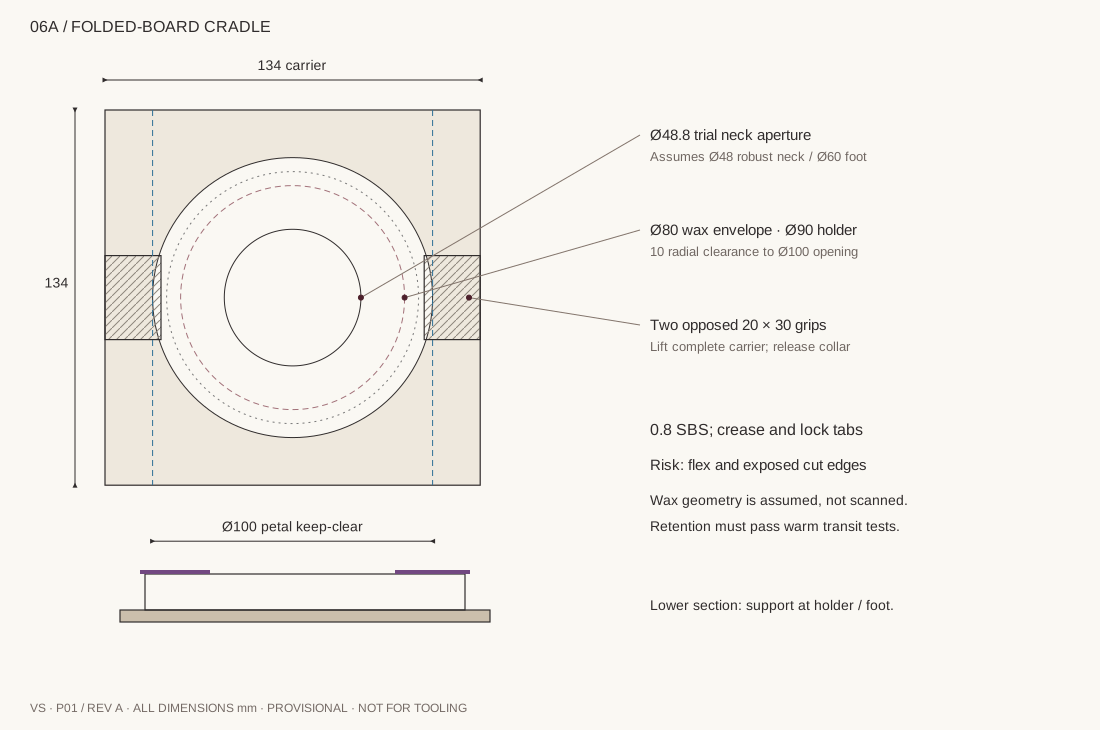
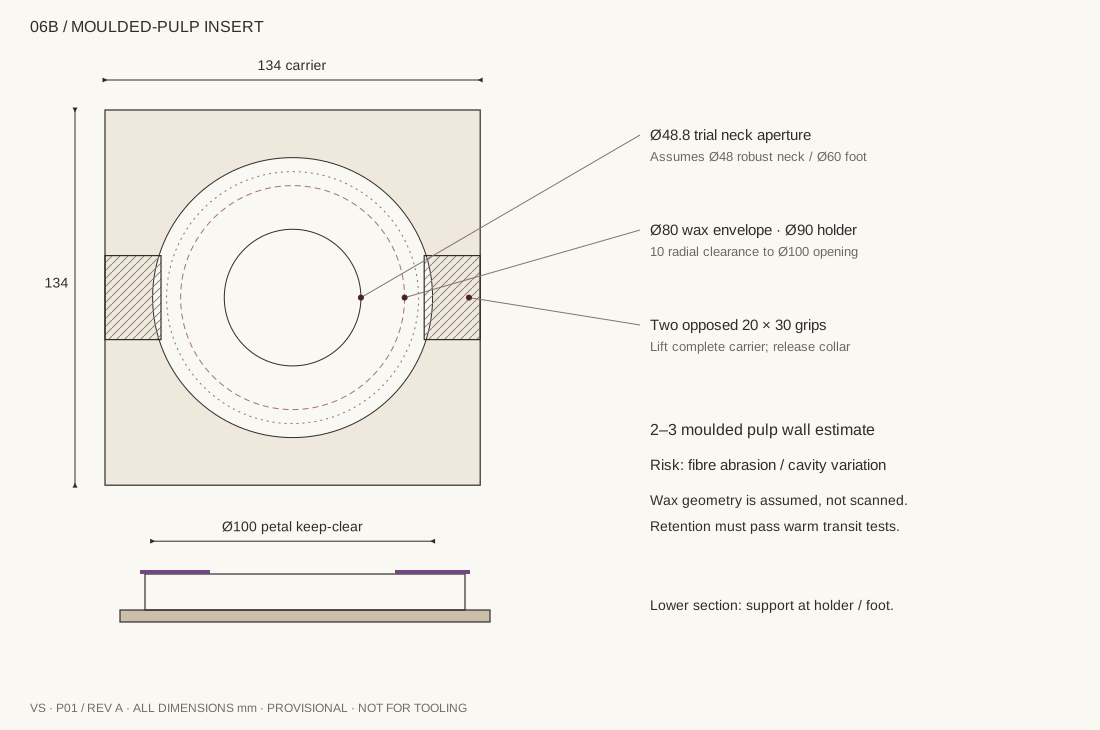
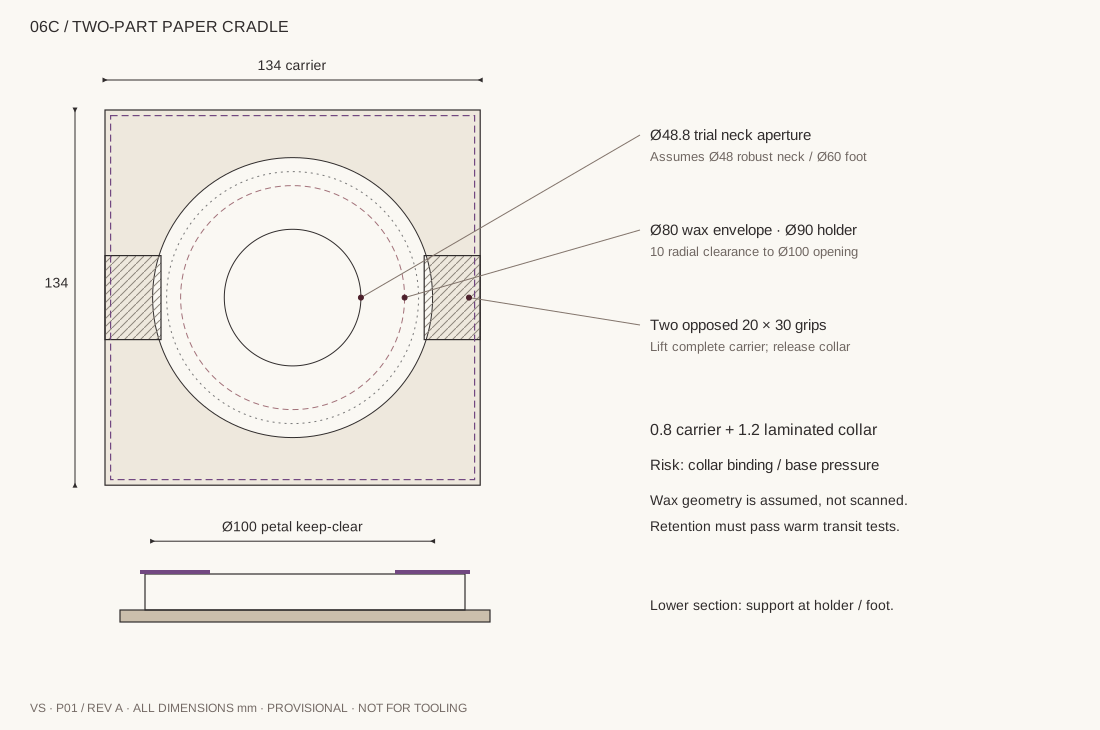
| Option | Cavity / contact / removal | Risks & complexity | Material implications | Decision |
|---|---|---|---|---|
| A · folded board | 134 square carrier; Ø100 petal clearance; 0.8 SBS; holder seat Ø91; two 20 × 30 grips | Low–medium complexity. Crease springback and flex can allow movement; cut edges can score wax | Flat blanks ship compactly; minimise laminations and glue | Useful low-cost comparison prototype |
| B · moulded pulp | 134 square outer; Ø100 upper corridor; Ø91 holder seat; 2–3 mm E walls; opposed grips | Medium–high setup: mould, draft and drying shrinkage. Fibres can scuff wax; a liner may be needed | Paper-based but drying, tooling and any barrier coating affect impact and recyclability | Revisit once shape and volume are stable |
| C · two-part paper | 0.8 carrier + 1.2 collar. Ø48.8 trial neck hole around assumed Ø48 neck / Ø60 robust foot ×12 high; collar below petals | Medium assembly. Check collar capture, holder rim and wax creep at heat; two halves must unlock without lifting wax by petals | Paper-first; two parts can separate. Avoid polymer film and unnecessary permanent lamination | Recommended first structural prototype, not approved transit pack |
Orthographic views, internal fits and section A–A. All values are provisional millimetres; SVGs remain editable.
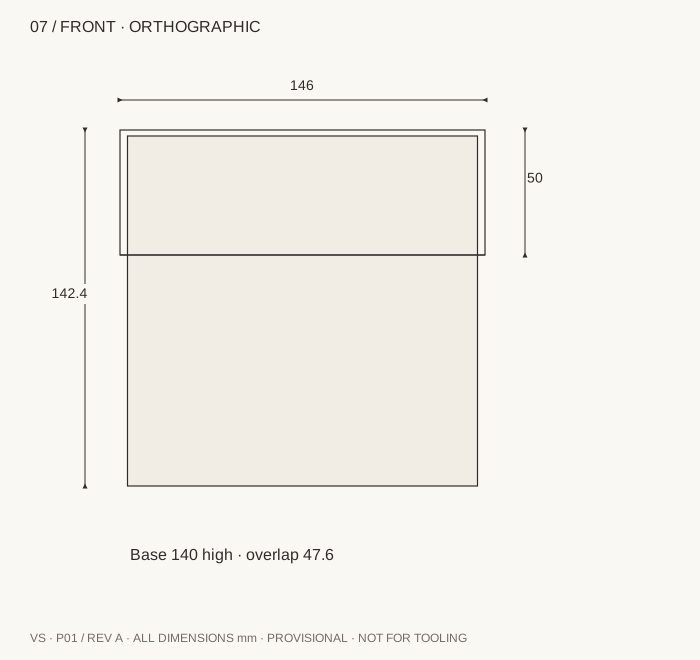
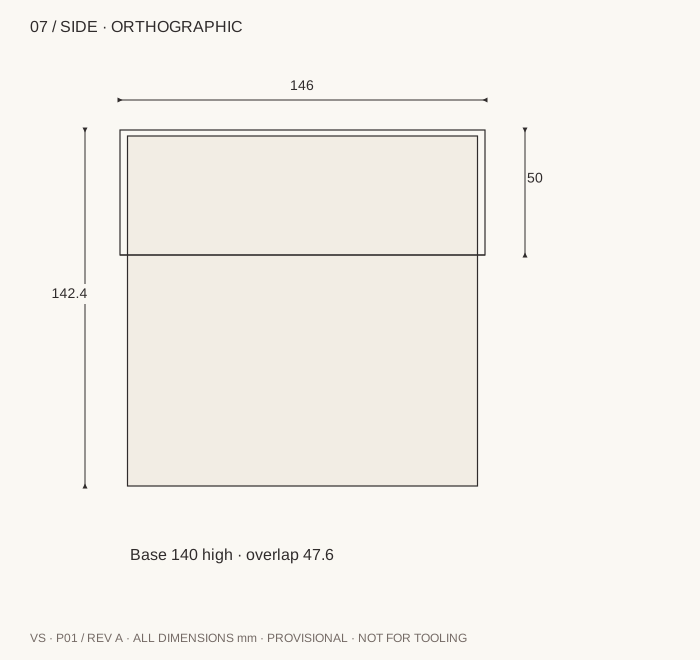
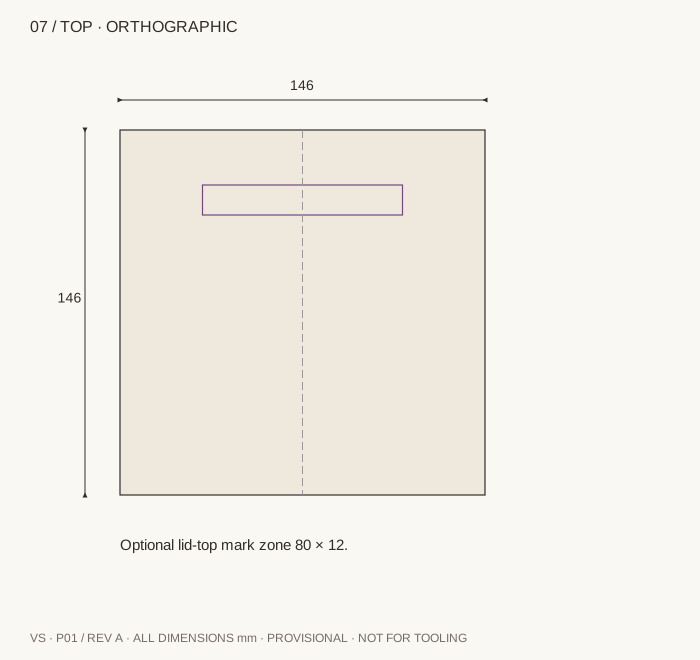
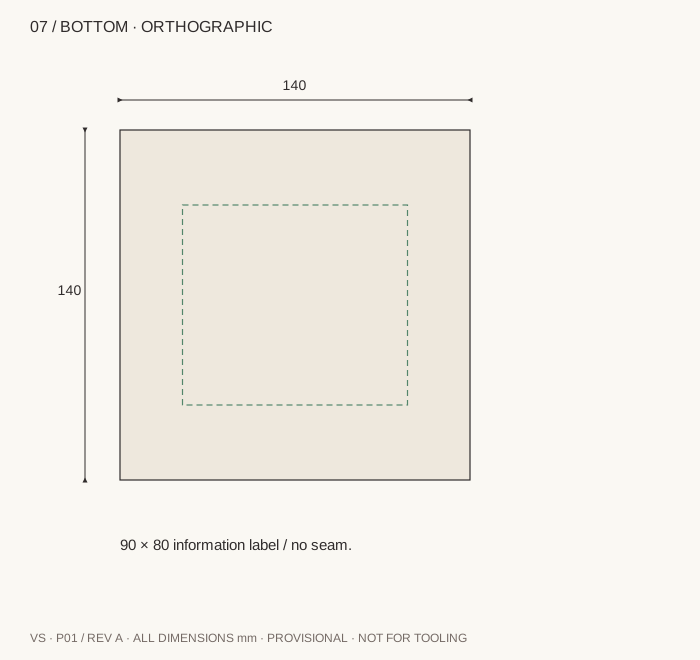
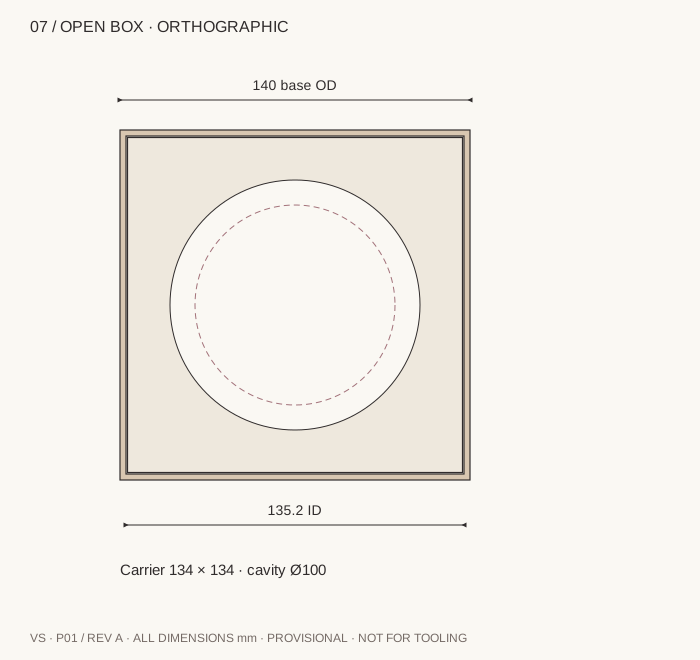
| Feature | Concept nominal (P) | Prototype review target (P) |
|---|---|---|
| Lid outside | 146 × 146 × 50 | ±0.5 overall; do not use this alone to judge paired fit |
| Lid inside plan | 141.2 × 141.2 | Fit to measured base; nominal 0.6 per side |
| Base outside | 140 × 140 × 140 | ±0.5 overall; inspect squareness and bow |
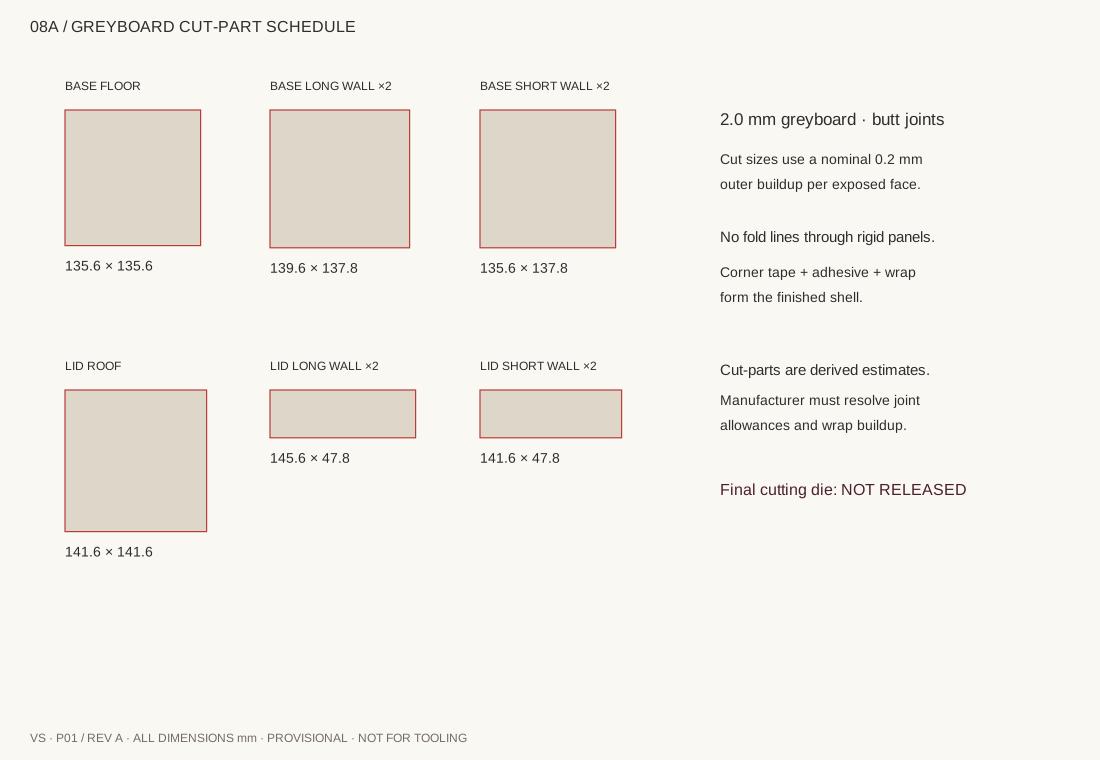
| Base usable inside | 135.2 × 135.2 × 137.6 | Derived from 2.4 E wall / floor |
| Finished closed assembly | 146 × 146 × 142.4 | Height is base 140 + top 2.4; lid overlaps base |
| Lid overlap | 47.6 | 50 outside skirt minus 2.4 top |
| Carrier / insert | 134 × 134 × 18 / 130 × 130 × 20 | Carrier leaves 0.6 each side in nominal cavity |
| Petal corridor / holder seat | Ø100 / Ø91 | 10 radial wax clearance / 0.5 holder clearance |
| Card slot / card | 112 × 112 × 2 / 110 × 110 × 0.4 each | 1 mm per edge; removal notch / easy grip |
| Fit acceptance trial | 0.4–0.8 per side at every corner | Matched pairs after conditioning; no binding or rattle |
| Wax and holder variation | Unknown | Measure 10+ samples before assigning production limits |
General dimensions are design proposals; they are not independent production tolerances. The manufacturer must set a workable tolerance stack for board, wrap, glue, humidity and squareness. Cut edges are solid; folds are dashed blue; hidden outlines are dashed grey; wax envelopes are dashed plum.
A wrapped rigid box has separate board panels and paper wrap blanks. These concept templates are not cutting-die files.
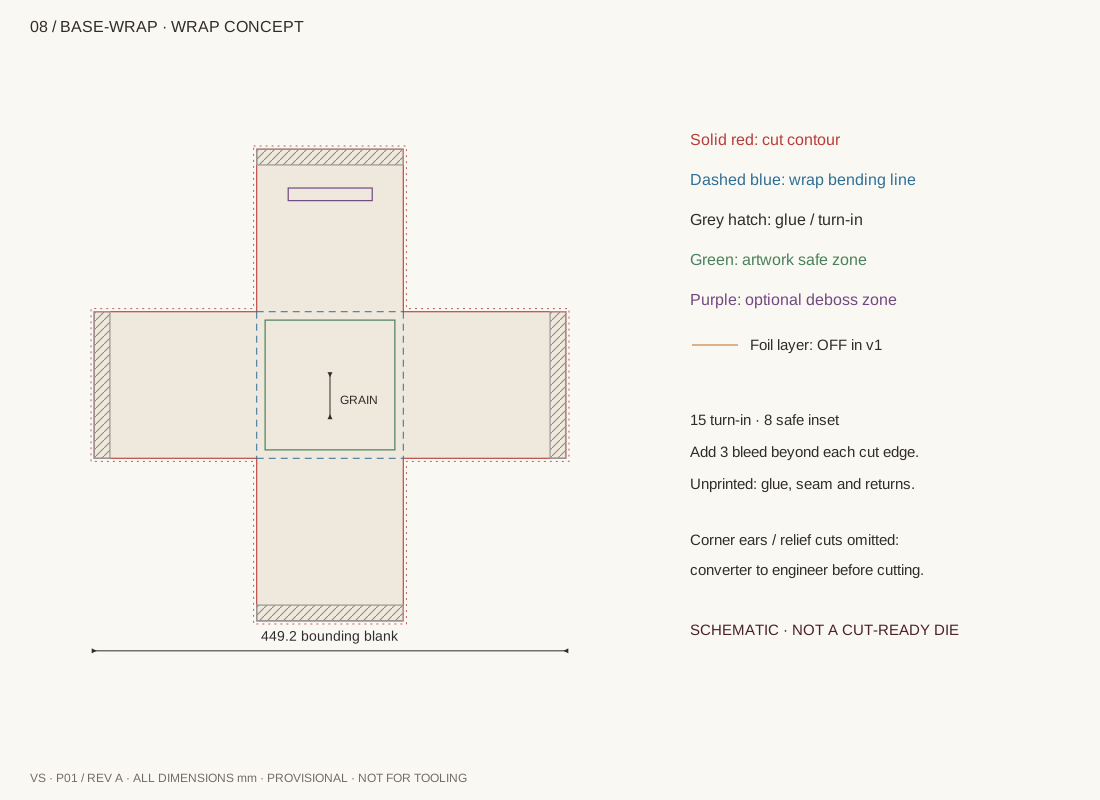
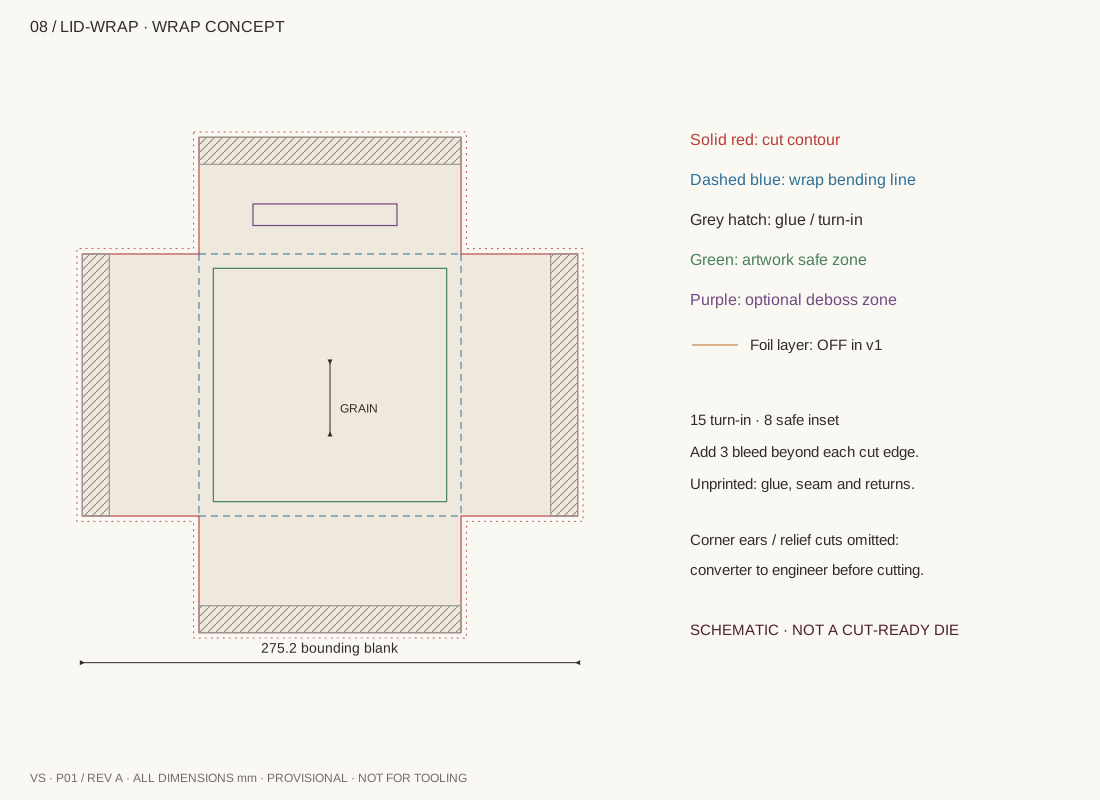
| Layer | Meaning | Production note |
|---|---|---|
| Solid red | Cut edge | Final corner ears, wrap joins and relief cuts not engineered here |
| Dashed blue | Wrap bending / board-crease line | For wrap or folding insert, not a crease through the separate rigid panels |
| Grey hatch | Glue zone / 15 mm turn-in | Mask from visible artwork; select adhesive with converter |
| Green outline | Safe print area | 8 mm inward from face edges as a design starting point |
| Purple outline | Blind-deboss zone | 80 × 12 working mark zone; die trial required |
| Orange finish layer | Foil / special finish | Disabled for first production; no foil die issued |
| Bleed | 3 mm outside final cut | Offset perimeter to be rebuilt after manufacturer finalises contour |
| Grain arrow | Proposed direction on main face | Test both grain directions at high-stress folds |
| No-print | Glue flaps, underside returns, wrap seam | Keep legal and identity text on visible planar panels |
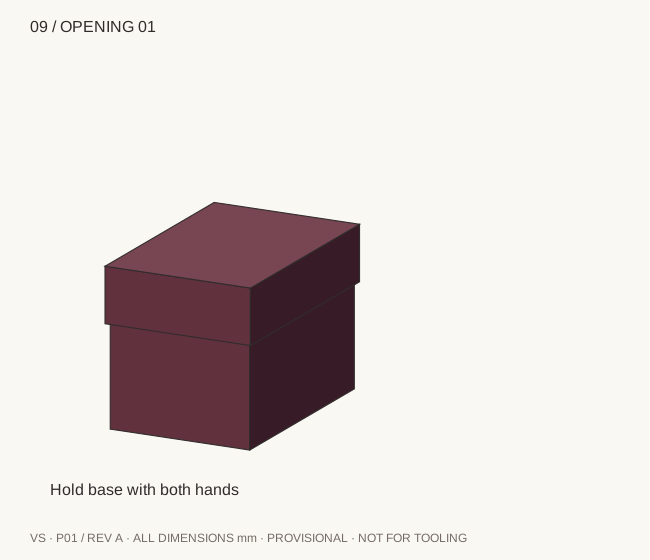
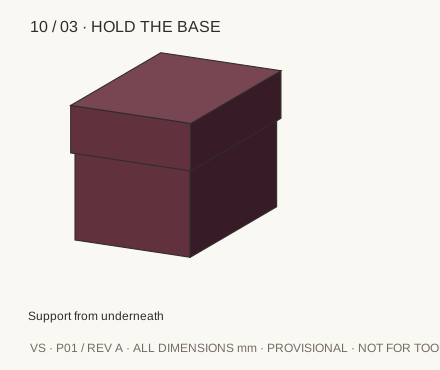
A controlled, smooth lift. The base must be supported; lid friction is not a carrying feature.
| Parameter | Trial direction | Failure to check |
|---|---|---|
| Grip | Opposing side walls of lid; support base underneath | No twisting, fingernail prying or gripping the wax |
| Clearance | 0.6 nominal per side; sample 0.4 / 0.6 / 0.8 | Too little: binding at corners; too much: lateral play and rattle |
| Resistance | Gentle two-handed lift; no jerk or sudden release | Do not specify seconds or force before testing actual materials |
| Overlap | 47.6; full clearance after >47.6 vertical lift | Paper scuffing and suction from deep engagement |
| Climate | Repeat fit trials after humidity / heat conditioning | Board swell, wrap creep, glue distortion and wax softening |
| Acceptance | Choose an approved physical fit master and record pull force | No numeric opening-force or production tolerance approved yet |
From delivery to a useful keepsake box. The visual frames show structure and handling rather than decorative scenes.
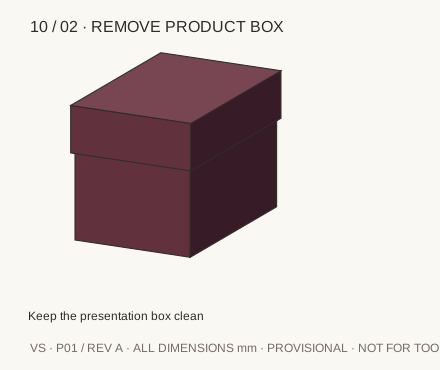
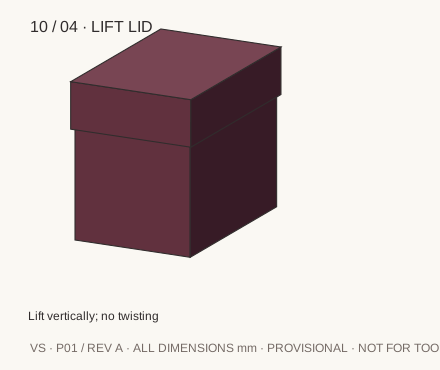
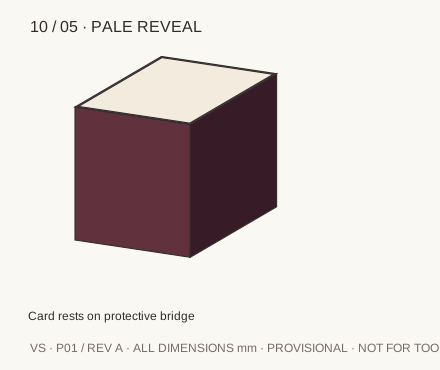
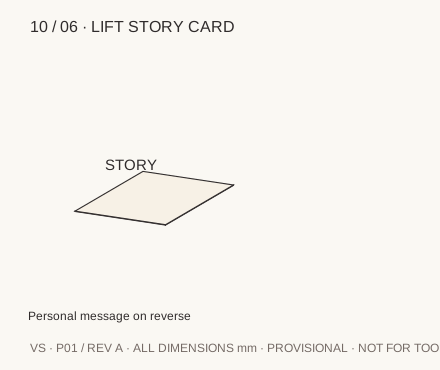
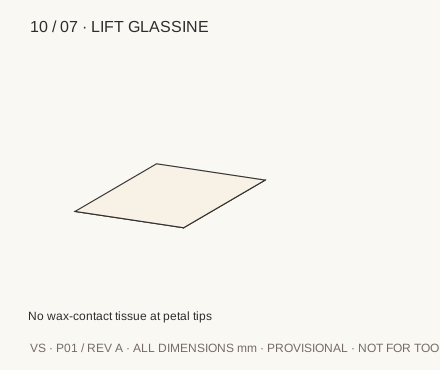
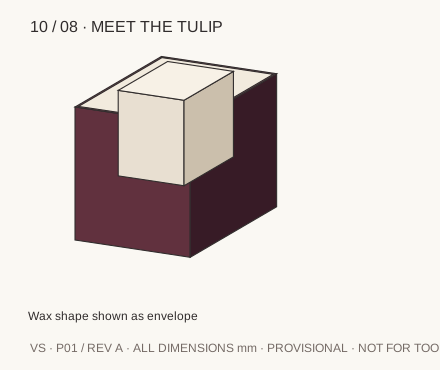
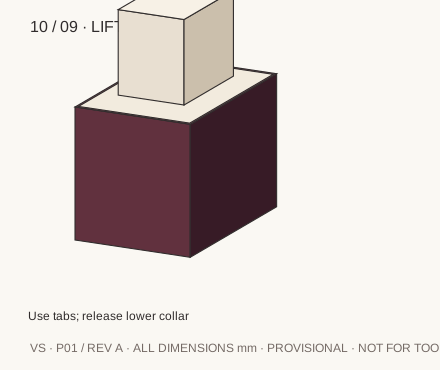
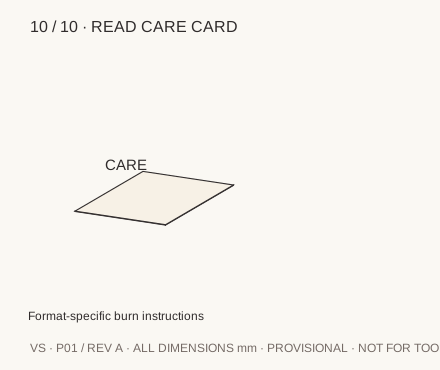
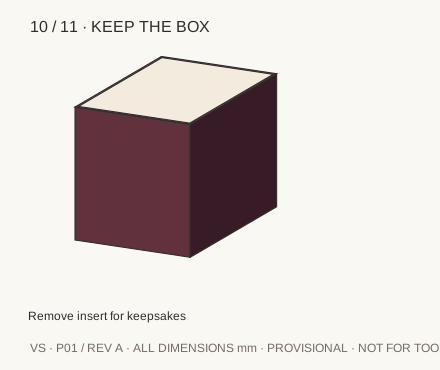
Lift the story card first. Keep the care card aside, remove the rigid bridge with its glassine cover, then lift the carrier by the two grip tabs. Open the lower collar before removing the candle and holder. The box is intended for dry keepsakes after the insert is removed; reuse is an option, not a promised environmental saving.
Appearance, touch and process are evaluated separately. Small-run suitability is a planning judgement, not a supplier quote.

Uncoated paper and carefully wrapped board form the first-production direction. No fake textile print, soft-touch film or broad metallic coverage.
Existing mood image; approved paper swatches and physical finish proofs still required.
| Material / process | Use / starting specification | Appearance / touch | Production | Small runs | Likely risk | Material / waste implications | P01 |
|---|---|---|---|---|---|---|---|
| Textured uncoated wrap | Main exterior; 120 gsm trial | Visible fibres; dry, natural grip | Dyed sheet, cut / print then wrap | Good; stock availability matters | Scuffing, cracking, glue show-through | Paper route; confirm coatings / adhesives | Yes |
| Cotton paper | Story card alternative | Soft, bulky, warm | Print / letterpress, trim | Good at low volume | Fine type fills; variable caliper | Fibre blend / sourcing to confirm | Optional sample |
| Coated art paper | Alternate printed wrap | Smooth, sharper print | Offset / digital then wrap | Good | Fold cracking; may need coating | Coating affects repulpability; verify | Backup only |
| Paper-wrapped rigid board | Lid and base | Weight; firm, architectural edges | Cut, corner tape, paste, wrap | Good with skilled hand assembly | Warp / squareness / glue odour | Heavy material; separate parts where possible | Yes |
| Moulded paper pulp | Shaped insert | Fibrous, softly formed | Wet forming, mould, drying / press | Tooling makes very small runs harder | Shrinkage, abrasion, draft fit | Paper-based; energy / barrier coating matters | Later |
| Folded SBS board | Carrier, bridge, collar | Clean pale surface, crisp folds | Die-cut / crease / fold | Good; digital knife prototypes | Springback; rough cut edges | Lightweight; minimise mixed layers | Yes |
| Glassine | Cover over bridge | Translucent, smooth, crisp | Cut / place; no printing | Good | Oil marking; static; fold tearing | Verify composition and local recycling | Trial only |
| Tissue | Alternative cover | Soft, light, crinkled | Cut and fold sparingly | Good | Dye transfer / fibres / excess layers | Low mass; wax contamination matters | Alternative only |
| Ceramic | Separate holder, not wax tulip | Hard satin glazed surface | Form, fire, glaze; decal option | Prototype / batch feasible | Glaze, dimension and thermal variation | Long life possible; not paper recycling | Provisional holder |
| Glass | Future Tulip Garden vessel | Clear, hard, cool | Mould / source stock vessel | Stock vessel easier at small runs | Breakage; rim tolerance; heat behaviour | Separate recovery stream; weight impact | Not Single Bloom |
| Soft-touch coating | Optional coated wrap | Velvety film-like surface | Coat or laminate | Supplier dependent | Fingerprints, peeling, batch variation | Polymer layer may hinder recycling | No |
| Blind deboss | Quiet main mark | Recessed mark; shadow / touch | Stamp flat wrap with trial die | Good; one-time die | Weak detail on rough paper, substrate damage | Adds no ink; base materials still matter | Yes, sample |
| Blind emboss | Secondary mark option | Raised relief | Matched dies on flat sheet | Good with die charge | Crushing in packing; registration | No ink required | Comparison only |
| Letterpress | Story-card alternative | Ink and shallow impression | Relief plate / press | Good for small runs | Spread / show-through / crushed fibres | Ink and stock to verify | Optional card |
| Screen printing | Opaque mark on dark wrap | Dense, slightly raised ink | Screen stencil, print / cure | Good with setup | Pinholes, ink film / drying | Ink chemistry and cleanup matter | Trial if needed |
| Offset printing | Cards and repeated wrap artwork | Fine, consistent print | Plate-based press | Better at repeat volume than prototypes | Colour drift, rub and set-off | Low coverage preferred; check ink | Yes as volume grows |
| Hot foil | Future scent number / gifting | Small reflective accent | Heated die and foil transfer | Possible; setup adds cost | Patchy coverage on textured wrap | Foil carrier waste; recyclability verify | Later |
| Die-cutting | Carrier, cards, wrap profiles | Clean physical edge | Knife prototype / steel-rule die | Good; die at repeat volume | Nicks, burrs, poor crease registration | Optimise nesting and waste | Yes |
| Engraving / ceramic printing | Small holder-base identity | Incised or fired mark | Engrave greenware / fired decal | Maker and tooling dependent | Glaze cracking, small-detail loss | Avoid extra mixed-material label if possible | Later, after thermal / glaze test |
The current wordmark is a working design. Review small sizes in physical print, in daylight and warm low light.
80 mm mark width · 12 mm nominal zone
60 mm mark width · reduce tracking slightly
35 mm trial width · simplify fine serifs
35 mm underside mark · keep off curved rim
60 mm mark width · single ink or letterpress
70 mm mark width · one-colour ink
Screen specimens compare proportions only; they are not physical-size proofs.
| Application / treatment | Optical adjustment to trial | Proof target (P) |
|---|---|---|
| Large 80 mm / blind deboss | Open counters, soften tight joins; keep strokes substantial | 0.4 mm minimum stroke starting test; 12 mm clear space |
| Medium 60 mm / ink or deboss | Slightly heavier hairlines; moderate tracking | 0.3 mm ink / 0.4 mm deboss stroke trial; 9 mm clear space |
| Small 35 mm / printed ink | Simplified optical master; less tracking; no fine italic ampersand if it fills | 0.25–0.3 mm ink stroke trial; 5.3 mm clear space |
| Holder 35 mm / decal or engraving | Reduce detail for curved / fired surface; mark underside | Start at 0.4 mm lines; maker to verify glaze and firing |
| Story card / letterpress | Do not press body copy deeply; use sturdy type | 9–10 pt body trial; 10 pt preferred for care card |
| Blind emboss comparison | Use simpler, larger mark; protect relief in transit | Trial 60–80 mm marks on actual wrap with matched tooling |
| Small foil detail / later | Avoid tiny reverse type and hairline ornaments | Start at 0.4 mm positive strokes; printer to proof |
These are test sizes, not approved minimums. Clear space starts at one capital-V height. Keep the wordmark in one colour, never stretch it, and make final vector masters after selecting the identity. Legal and care text must stay readable; do not force it into decorative microtype.
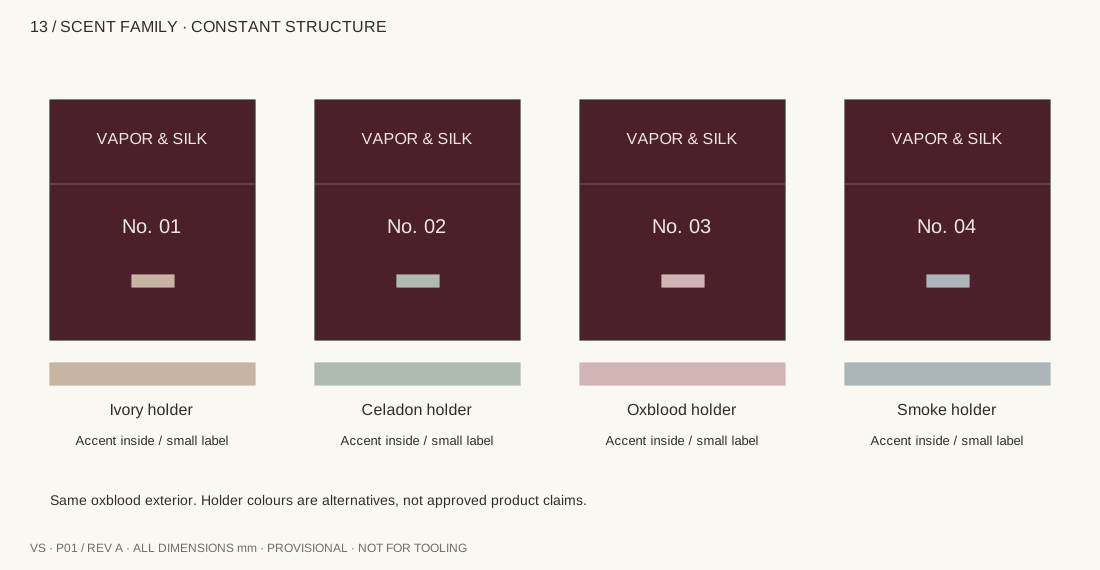
The numbered family keeps its oxblood exterior. Scent names, fragrance notes and holder colours remain open.
| Role / No. | Exterior | Interior / small accent | Wax / holder concept |
|---|---|---|---|
| Masterbrand | #4C202B Oxblood | #F3EEE7 Warm Ivory; #321A22 Deep Wine ink | Ivory wax is the base expression |
| 01 | #4C202B | #C7B4A2 Pale Clay | Ivory wax / ivory holder |
| 02 | #4C202B | #AFBBB0 Mineral Green | Ivory wax / celadon holder |
| 03 | #4C202B | #D1B4B4 Muted Blush | Ivory wax / oxblood ceramic holder |
| 04 | #4C202B | #ABB5BA Smoke | Ivory wax / smoke-grey holder |
| Light prototype alternative | #F3EEE7 Warm Ivory | #4C202B wordmark; same numbered accent | Compare physically, then choose one launch exterior |
HEX is a screen reference, not an ink or glaze specification. Show scent colour on the card edge or one small label plus an inner detail; do not recolour every component. Oxblood ceramic is a possible separate holder or future vessel direction, not the material of the sculpted tulip.
The rigid box is a presentation pack. Corrugated transit packaging and paper pads provide the shipping buffer.
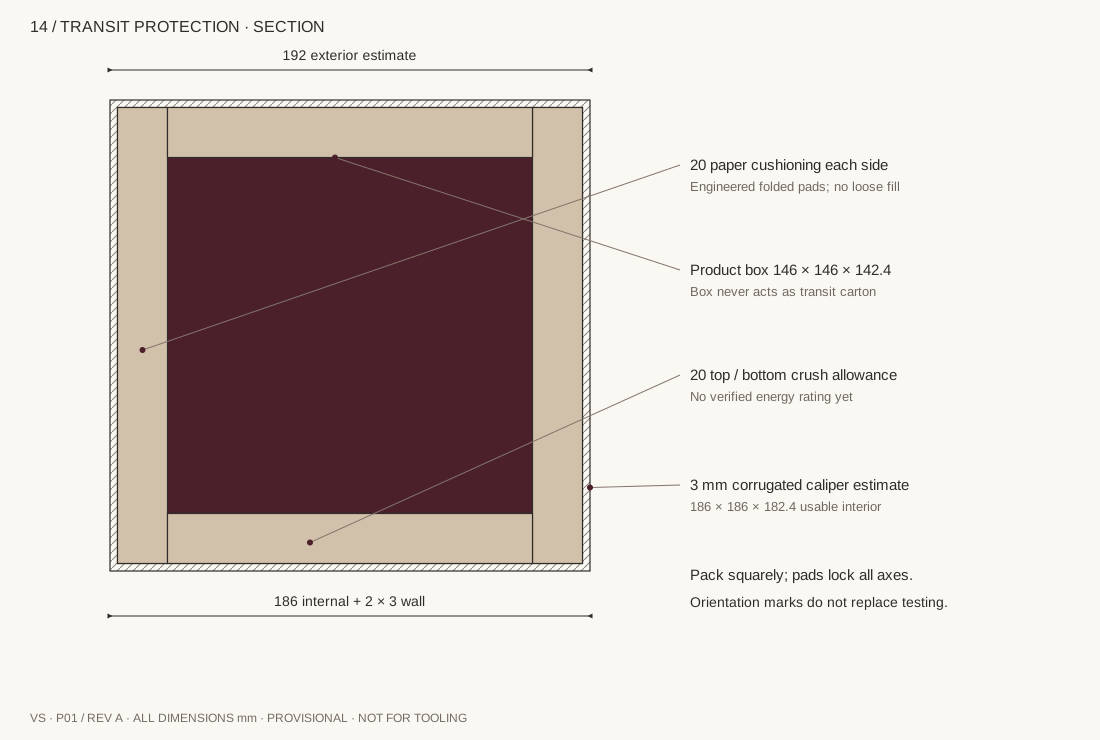
Provisional usable carton interior: 186 × 186 × 182.4 mm. At an estimated 3 mm wall, outside size is about 192 × 192 × 188.4 mm; flap joints may add local thickness. Grade, strength and pad geometry depend on packed mass and test results. “This way up” and fragile marks may guide handling but are not protective measures.
Ask the test laboratory to select the protocol for the actual distribution route. ISTA’s parcel testing guidance is a starting reference; this design has not been tested or certified.
P = proposed geometry. E = estimated material caliper. No row is released for production.
| Component | Material | Thickness (E unless noted) | Finish | Approx. dimensions (P), mm | Production method | Notes |
|---|---|---|---|---|---|---|
| Lid | Greyboard + wrap + lining | 2.0 core; 2.4 finished E | Oxblood, blind deboss | 146 × 146 × 50 | Panel cutting / taping / wrapping | 141.2 clear ID; pair to base |
| Base | Greyboard + wrap + lining | 2.0 core; 2.4 finished E | Oxblood / pale inner | 140 × 140 × 140 | Panel cutting / taping / wrapping | 135.2 internal plan; inner height 137.6 |
| Outer wrap | Dyed uncoated textured paper | 120 gsm; caliper TBD | Natural texture; limited ink | Base blank 449.2 sq; lid 275.2 sq bounding | Cut / print / deboss / paste | 15 turn-ins; add 3 bleed; contours not final |
| Inner carrier + bridge | SBS paperboard | 0.8 | Pale uncoated | 134 × 134 × 18 carrier; 132 × 132 bridge | Die-cut, crease, lock tabs | Side supports carry bridge at z132.4 |
| Candle insert | Laminated paperboard collar | 1.2 | Smooth contact edges | 130 × 130 × 20; aperture Ø48.8 trial | Cut two halves; mechanical slots | Must fit actual lower wax feature |
| Glassine | Unprinted glassine | 40 gsm; 0.05 E | Translucent | 132 × 132 | Trim / place on bridge | No load on petal tips; contact test |
| Story card | Uncoated stock | 300 gsm; 0.4 E | One-colour print | 110 × 110 | Digital prototype / offset | Brand + scent + personal note |
| Care card | Uncoated stock | 300 gsm; 0.4 E | Dark readable print | 110 × 110 | Digital / offset | Instructions after burn testing |
| Shipping carton | Corrugated board; grade TBD | 3.0 E | Kraft / single ink | 186 × 186 × 182.4 internal | Slot, score, join | Mass / route determines board grade |
| Transit pads | Folded corrugated / honeycomb | 20 installed envelope | Unprinted | Cut to all six faces | Cut / fold / nest | Installed crush space is not a performance rating |
| Candle label | Uncoated paper + compatible adhesive | Caliper TBD | One-colour print | 35 × 20 trial | Print / die-cut | Holder underside only; no petal adhesive |
| Candle vessel / holder | Ceramic saucer, provisional | 3 wall E | Satin glaze | Ø90 × 12 envelope | Form / fire / glaze | Separate from wax; thermal and stability tests |
| Wax candle | Blend and fragrance TBD | N/A | Ivory / blush trials | Ø80 × 90 including foot | Mould / finish | Mass, shrinkage and foot profile unknown |
A practical enquiry brief for specialist converters. Difficulty and scale are planning estimates; obtain supplier quotes and physical samples.
| Treatment | Local production route / material | Difficulty | Tool / die | Optical adjustment | Quality / batch risks | Scale |
|---|---|---|---|---|---|---|
| Rigid shells | 2.0 greyboard; manual or semi-auto panel assembly / wrap | Medium | Knife prototype; cutting die + assembly jig at volume | No logo adjustment here | Warp, square corners, tape ridge; batch caliper | Prototype / small / medium / large |
| Dyed textured wrap | Stock uncoated 120 gsm; paste wrap | Medium | Cutting die at volume | Yes: mark on actual grain | Scuff / grain / lot shade; likely variation | All; stock MOQ to quote |
| Blind deboss | Flat wrap stamping before assembly | Medium | Custom brass / suitable metal die | Yes: heavier hairlines / open counters | Depth and clarity vary with stock and pressure | Prototype die / small onward |
| Blind emboss | Flat wrap with matched tooling | Medium–high | Matched male/female dies | Yes: simplify mark | Relief flattening and registration | Sample; later gifting |
| Ink printing | Digital proof; offset for repeat sheets; screen for opaque marks | Low–medium | Offset plate / screen when selected | Yes at small sizes | Ink shade / coverage / dry rub varies | Digital small; offset medium / large |
| Carrier / collar | SBS knife-cut prototype; die-cut / crease repeat | Medium | Steel-rule cutting and creasing tool | N/A | Grain springback, cut burrs, glue migration | Prototype / small / medium / large |
| Moulded pulp | Matched product cavity; forming / drying | High setup | Forming tool, trim tooling | N/A | Shrinkage, surface roughness and moisture | Prototype tooling; medium / large after quote |
| Cards / letterpress | Uncoated 300 gsm; print / trim / optional impression | Low–medium | Plate if letterpress | Yes: positive strokes / readable body | Impression and stock thickness variation | Small through large |
| Hot foil | Small number or gift detail on flat sheet | Medium | Heated stamping die | Yes: avoid fine reverse lettering | Patchy coverage on texture; foil shade lot | Sample / later gift runs |
| Holder marking | Fired decal or maker-controlled engraving | Medium–high | Decal screens / engraving tool as needed | Yes: low-detail mark | Firing shrinkage, glaze shade, mark position | Maker-dependent; sample first |
| Shipper / pads | Corrugated conversion and paper-tape sealing | Low–medium | Slotting / scoring; pad die at volume | Keep shipping mark robust | Board moisture, crush, joint quality | All; strength selected by test |
Indian converter BoxCraft lists lid-and-base boxes, paper inserts, printing, embossing/debossing and prototyping among its services. These are capability references, not a supplier qualification or price commitment.
Holmen’s creasing guidance supports testing grain direction and fold behaviour. Its embossing guidance is useful when discussing relief on the chosen board. Exact die geometry and process settings belong to the converter.
Request separate costs for prototypes, dies, assembly, print and freight at 100 / 500 / 1,000 / 5,000 units. Confirm stock availability, MOQ, lead time, lot colour control, approved sample retention and the remedy for damaged or out-of-tolerance boxes.
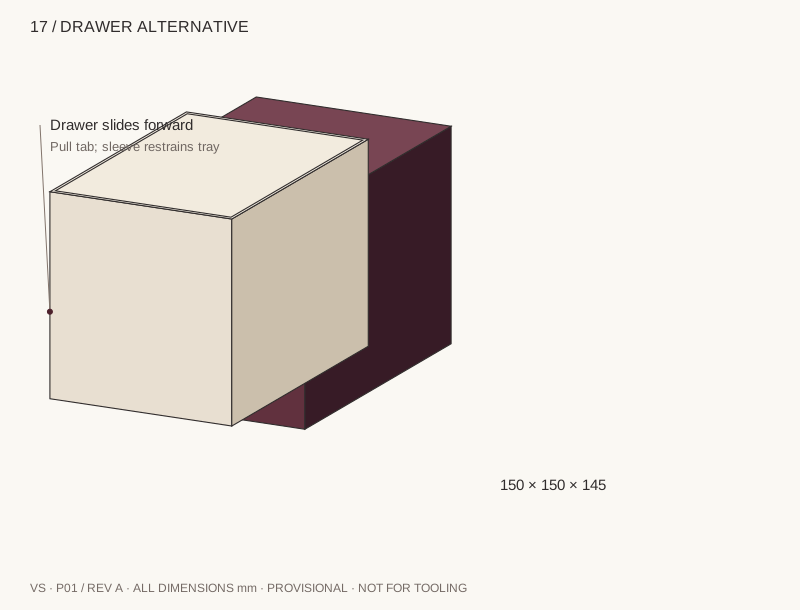
Compare the recommended lift-off box with a drawer and a book-style magnetic gift box. Relative costs are design estimates, not market quotes.
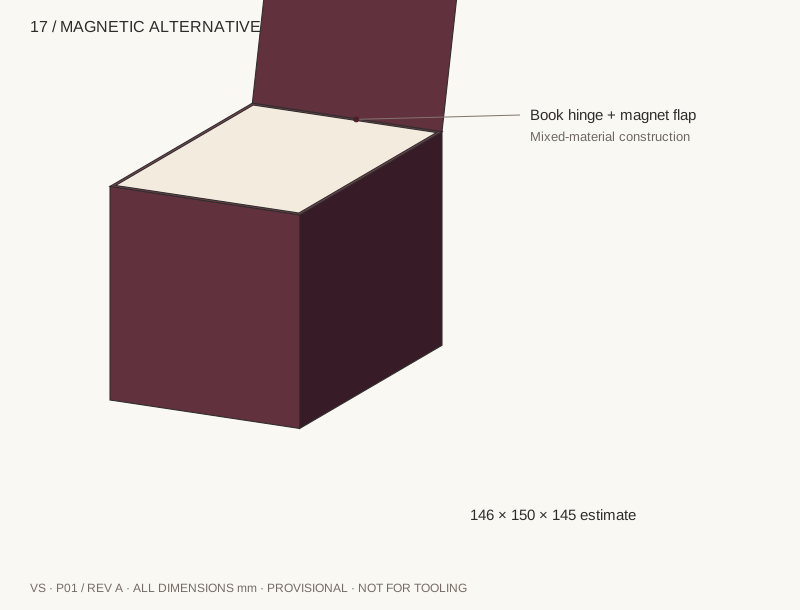
| Structure | Experience / protection | Material & cost | Scale / risk | Vapor & Silk decision |
|---|---|---|---|---|
| Recommended · lift-off rigid | Vertical reveal; full access to bridge and carrier; independent transit carton | Two simple shells; medium material / assembly | All scales; paired fit and corner quality are the risks | Best starting structure for a quiet, tactile launch |
| A · drawer rigid | Gradual reveal; sleeve restrains tray. Horizontal movement can jolt an unsecured candle | Extra sleeve and tray surface; usually more assembly than simple lift-off | Good repeatability after sleeve fit tooling; pull-tab and slide wear | Strong discovery-set option later; no first-run advantage for tall Single Bloom |
| B · book magnetic | Immediate hinged reveal; does not provide slow lift resistance; wax still needs independent retention | Cover, hinge, flap and magnets add parts; likely highest complexity of three | Manual small batch possible; magnet polarity, bond and hinge-fatigue checks | Reserve for a larger gift set if customer value justifies added materials |
All three alternatives require a fitted insert and outer shipper. A magnet is a closure component, not a substitute for transit restraint.
Proceed to structural prototypes, not production tooling.
| Decision | P01 recommendation |
|---|---|
| Structure / opening | Two-piece rigid lift-off box; 47.6 mm overlap, trial 0.6 mm fit gap per side |
| Insert | Two-part paper cradle + lift-out carrier, conditional on safe lower-foot retention |
| Materials | 2.0 greyboard; textured uncoated wrap; pale lining; SBS insert; corrugated shipper |
| Colour | Oxblood outside / warm ivory inside; compare one ivory outer sample before launch choice |
| Logo / type | Blind-debossed wordmark plus single-colour information; simplified optical master for small sizes |
| First run | Approve structural white samples → finished print sample → conditioned packed-product tests → pilot lot |
| Postpone | Magnets, ribbon, foil, custom pulp tooling, multiple outer colours and unverified sustainability claims |
| Main risks | Wax softening / retention, petal damage, ceramic breakage, lid binding, board warp and dark-paper scuffing |
| Next prototypes | One white shell; three insert options around real candle; 0.4 / 0.6 / 0.8 lid-fit sets; oxblood and ivory material samples; complete shipper |
| Production release | Brand, structural designer and manufacturer sign off the measured drawing set, test results and retained physical sample |